
MENUMENUCLOSECLOSE
Stay Connected


Interactive Commerce • WebGL & Innovation • Immersive Design
20 Nov 2025
10 MIN READ 




In today’s digital landscape, customers expect more than static images or videos. They want to interact, explore, and personalize. This shift in behavior has made 3D configurators one of the most impactful tools for brands looking to bridge the gap between online and in-person experiences.
A 3D configurator allows users to view a product from every angle, change materials or colors, and see updates instantly, all within their browser. It creates a sense of control and understanding that traditional visuals can’t match.
For brands, this means higher engagement, improved customer confidence, and a stronger perception of quality. Let’s explore how different industries are using this technology, what measurable benefits it brings to businesses, and how it can be implemented without disrupting your existing setup.

The adoption of 3D configurators isn’t limited to one niche. It’s expanding across industries that rely on visual decision-making and personalization.
Here’s how it’s changing the game in key sectors:
E-commerce has moved far beyond flat product images and short clips. Today’s shoppers expect to interact with products the same way they would in-store, turning them around, viewing textures, and trying out different options. With a 3D configurator, users can rotate products in real time, switch between materials, or test colors and sizes before adding to cart.
For example, someone shopping for sneakers can see how the shoe looks from every angle, change the color of the sole or laces, and instantly understand the product’s design quality. This level of interaction builds trust and reduces uncertainty. Brands adopting this approach often see noticeable improvements in both conversion rates and customer satisfaction. It turns the online buying process from a guessing game into a confident choice.
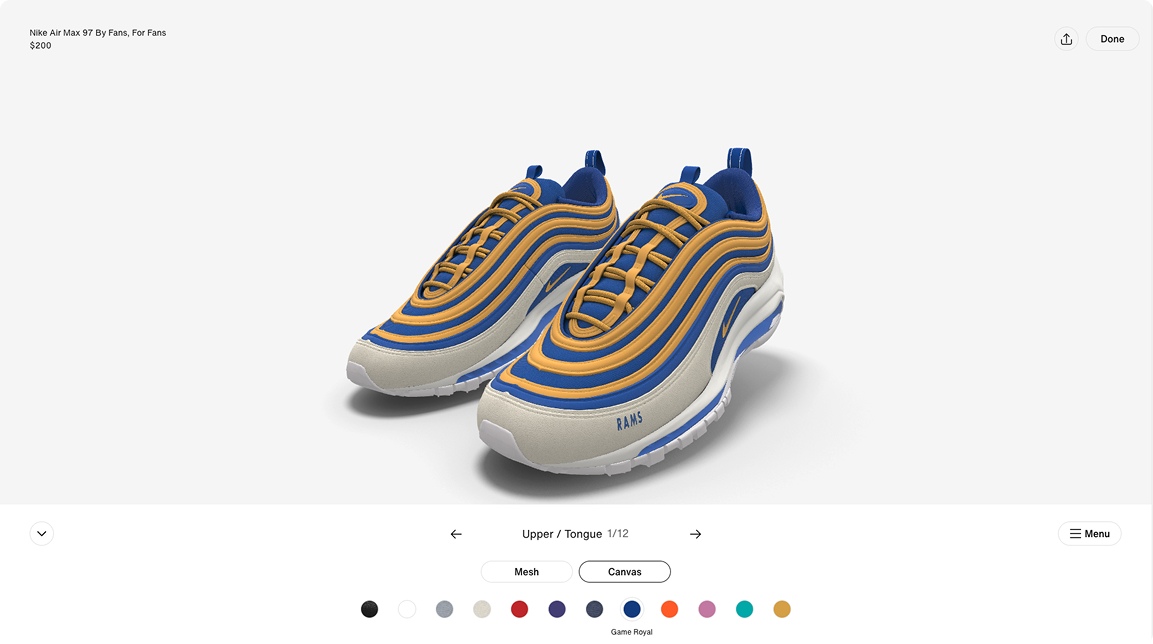
Nike 3D Shoes Configurator
The automotive industry was one of the earliest adopters of 3D configurators, and for good reason. Buying a car involves dozens of design and specification choices, from exterior paint to seat stitching. A 3D configurator allows potential buyers to explore these options interactively, swapping trims, testing lighting setups, and even viewing the car in different environments or times of day.
This not only enhances the visual experience but also increases engagement. Users spend longer exploring configurations, which naturally leads to higher-quality leads and stronger emotional connection with the product. For dealerships and brands, it means more qualified customers arriving already confident in their preferences.
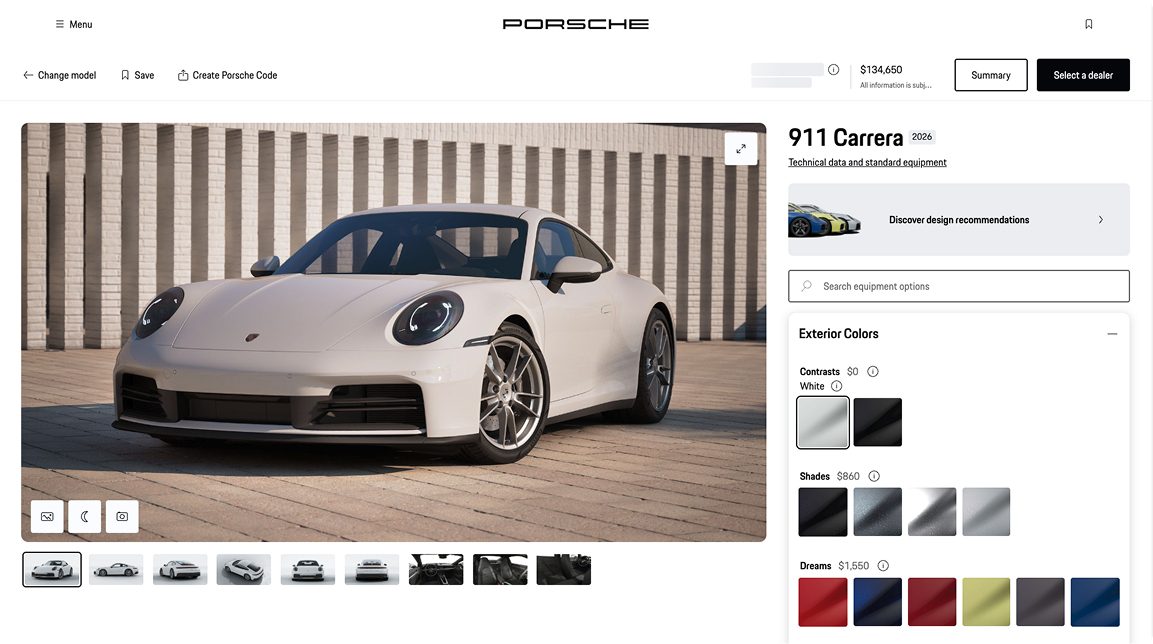
Porsche 3D Car Configurator
When it comes to furniture, visualization is everything. A 3D configurator enables users to experiment with multiple fabrics, sizes, finishes, and arrangements in a realistic 3D space. Whether it’s a sofa, table, or complete interior setup, customers can instantly see how each change affects the look and feel of a product.
This approach dramatically reduces the gap between imagination and reality. Customers no longer rely on guesswork or static photos to make a purchase decision. They can visualize how a piece fits into their home or office environment, helping reduce returns and improve long-term satisfaction. For brands, it’s a clear path to building buyer confidence while showcasing craftsmanship and material variety.
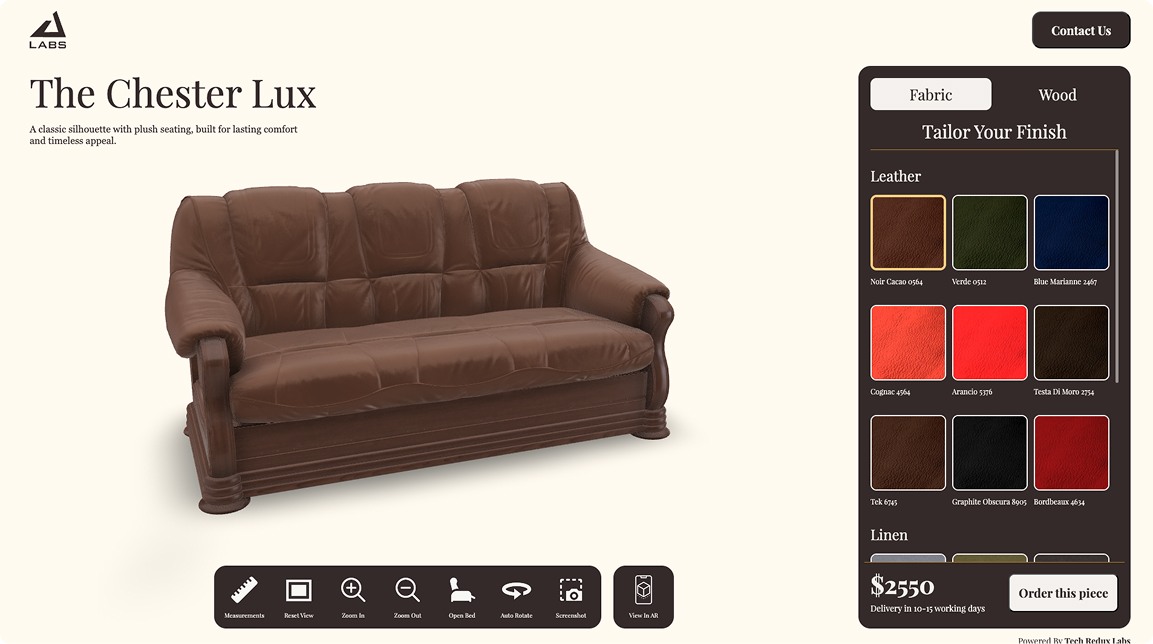
3D Sofa Configurator Demo by Tech Redux Labs
Luxury items are emotional purchases. Buyers care about detail, light reflection, and visual impact. 3D configurators bring this sense of tangibility online. They allow customers to zoom in on fine craftsmanship, view jewelry from any angle, and see how it interacts with lighting conditions. Some even include virtual try-on features, letting users see how a piece would look on them or on different skin tones.
This level of realism replicates an in-store experience digitally, offering a balance of convenience and exclusivity. For luxury brands, it strengthens trust and enhances perceived value. The result is a shopping experience that feels personal, immersive, and aligned with the premium nature of the product.
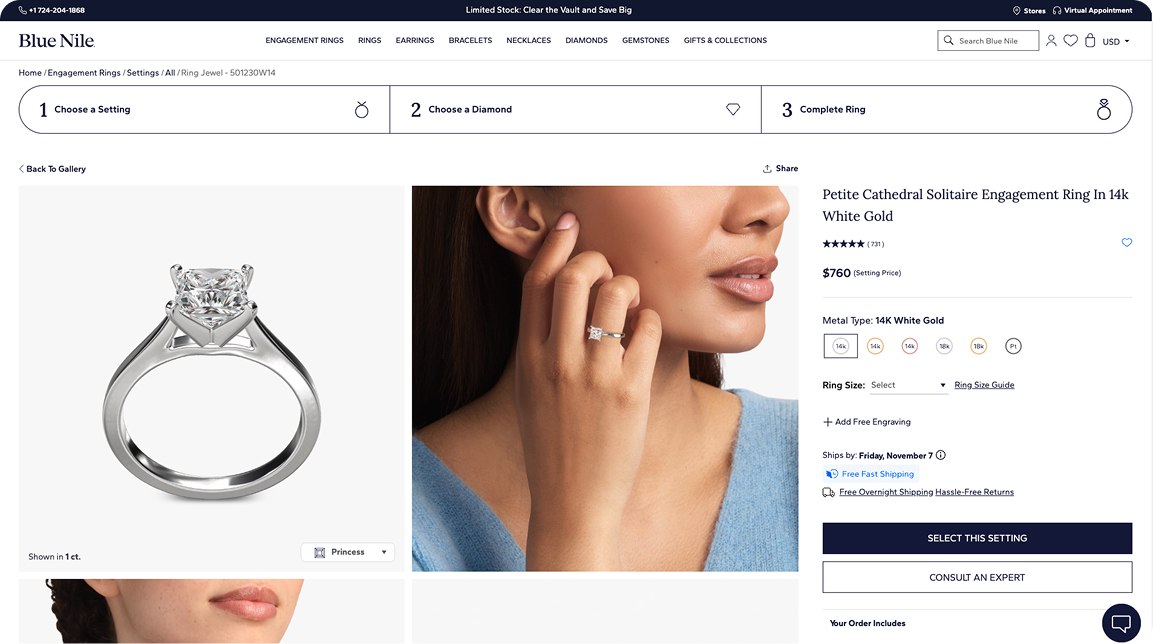
Blue Nile 3D Jewellery Configurator
In real estate and architecture, 3D configurators are reshaping how potential buyers and investors explore properties. Instead of static blueprints or rendered images, users can virtually walk through entire spaces, switch between layouts, and visualize different finishes, lighting, or furnishings. All in real time.
For developers, this reduces the dependency on physical showrooms or model apartments. Buyers can get a realistic understanding of scale, design, and flow long before construction finishes. For architects, it offers a more interactive way to present design concepts to clients, making collaboration faster and more intuitive. It’s a tool that saves time, improves clarity, and elevates the overall presentation of a project.
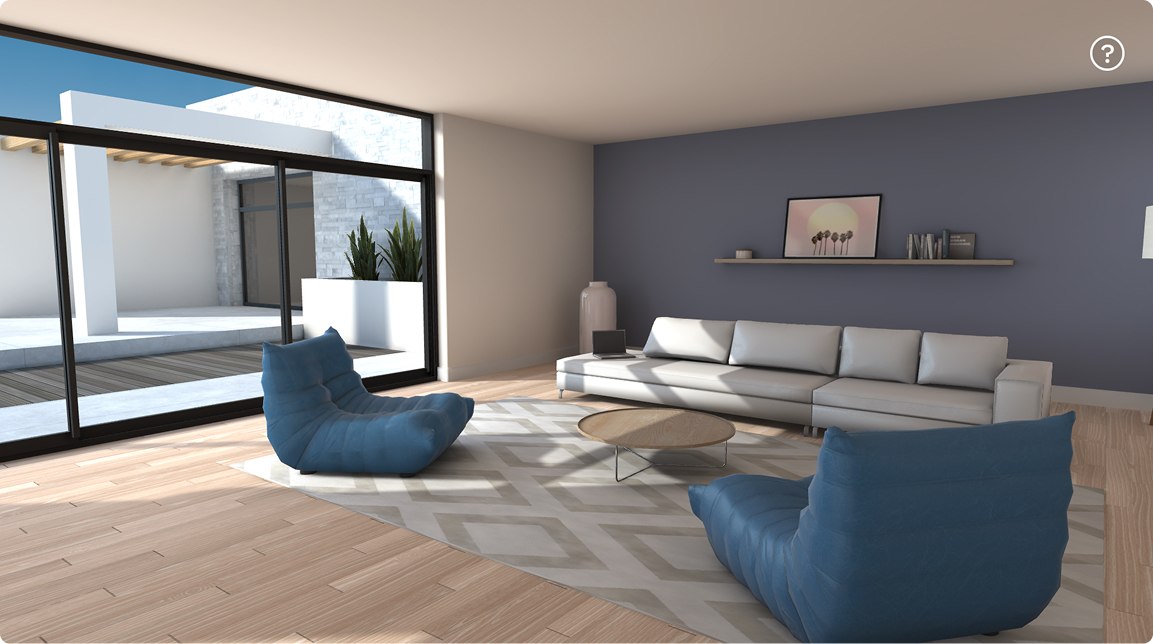
3D Configurator Demo built by Littleworkshop
3D configurators offer both measurable and strategic advantages. Beyond the “wow” factor, they directly impact sales, engagement metrics, and brand loyalty.
Here’s a breakdown of the core business benefits:
Users spend more time interacting with 3D experiences because they’re active participants rather than passive viewers. This additional engagement strengthens the emotional connection to the product.
When customers can see and customize a product, hesitation drops. Studies show interactive product visualization can increase conversion rates by up to 30–40% compared to traditional 2D displays.
3D configurators help users understand what they’re purchasing in detail. By showing accurate proportions, textures, and lighting, brands see fewer mismatched expectations and lower return rates.
Offering a 3D experience signals innovation, confidence, and attention to detail. It positions a brand as premium and forward-thinking, especially in competitive markets where differentiation matters.
Each interaction inside a configurator can be tracked, revealing what options users explore most, which colors convert better, or how engagement varies by product. This helps inform design and inventory decisions.
In short, configurators do more than make products look good. They turn browsing into a decision-making process and help brands understand their audience better through interaction data.
Many brands assume adopting 3D experiences means overhauling their website or changing platforms. That’s not true. At Tech Redux, we’ve developed a streamlined integration process that fits into your existing technology stack without disruption.
Our focus is on adding value, not complexity. You keep your existing workflow, we just enhance it with interactivity.
Before jumping in, businesses should understand the key elements of a successful configurator:
3D configurators are changing how users shop, explore, and decide. They bring interactivity, personalization, and confidence into the buying process. Three things every brand needs in a digital-first world.
For businesses, they deliver measurable ROI through engagement, conversion, and brand elevation. And with the right integration approach, they can be added to existing sites easily, no need to start over.
At Tech Redux, our mission is to help brands evolve toward more immersive, human-centered web experiences. Configurators are one step in that journey, turning interaction into understanding, and visitors into confident customers.
 by the team at Tech Redux by the team at Tech Redux
